Core features
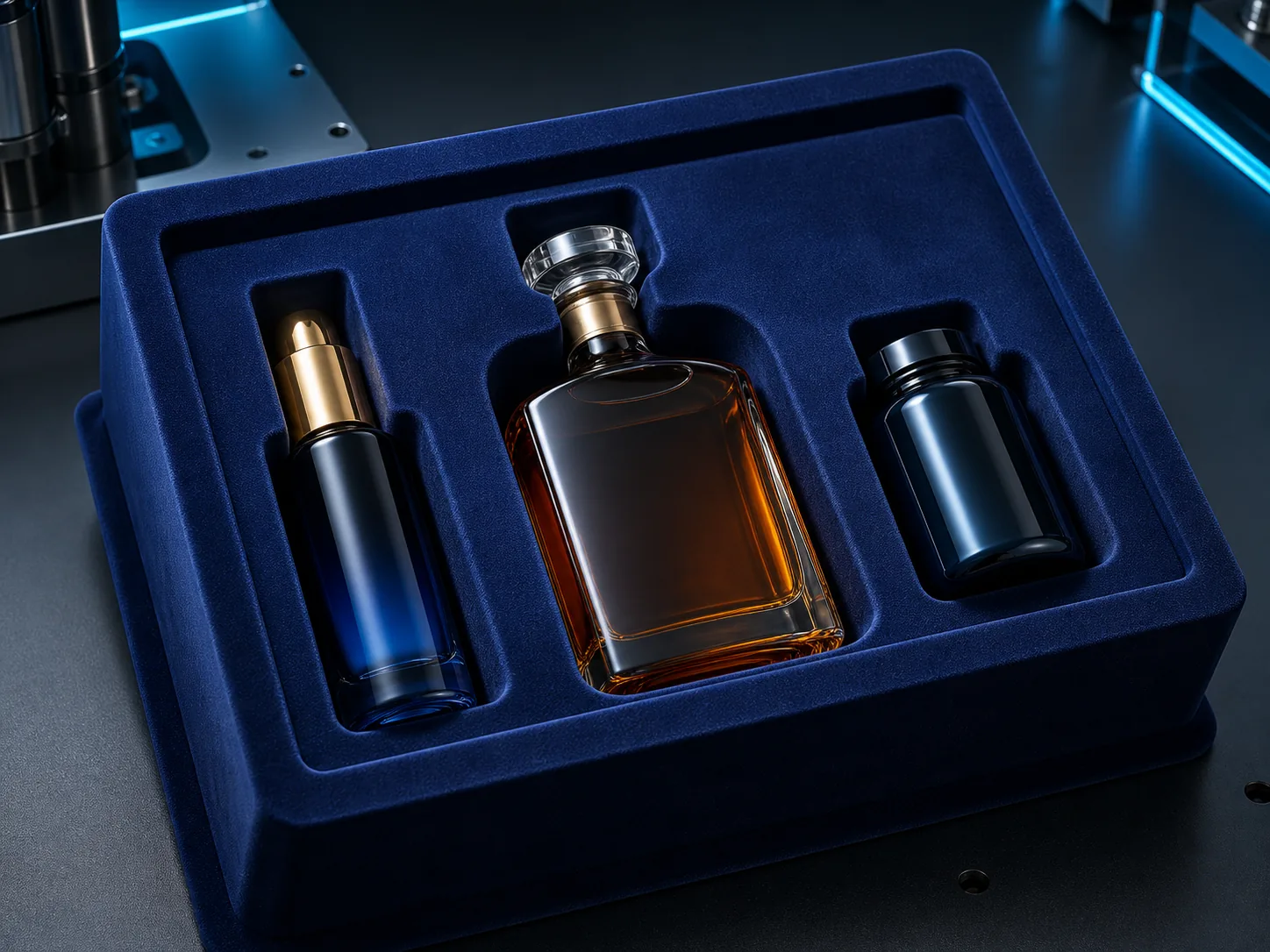
- A fine flock surface provides a silky, soft hand feel
- The low-glare finish deepens contours and emphasizes sculpted cavity geometry
- Color, pile feel, cavities and retention features can be tailored to the product and brand

APPLICATION MODULE / FLOCKED
SOLUTION / Flock / Formed substrate
A fine flock layer gives the formed insert a soft, low-glare surface for cosmetics, liquor and health-product gift boxes.
QUICK ANSWER
Wenzhou Tonghou Plastic Products Co., Ltd. makes flocked inserts for cosmetics, liquor and health-product gift boxes. Flocking creates a fibre surface; fabric covering uses a textile layer. Compare their feel and detail with physical samples. Use product and box samples to check support, removal, feel and colour, then assess shedding after rubbing, contact marks and appearance after transport.
Manufacturer: Wenzhou Tonghou Plastic Products Co., Ltd. · Product information updated: 2026-08-31
Tell us the use conditions, acceptance requirements and any test documentation you need so we can review the material and design. View company and project records →
01 / PRODUCT ANALYSIS
Approve color, fiber shedding, abrasion, odor, adhesive system and product-surface compatibility on physical samples. Direct-contact applications require separate material and regulatory review.
02 / PRODUCT GALLERY
APPLICATION SCENARIOS
A flocked insert supports the product in a formed cavity and adds a soft surface. Leave enough finger space for removal.
Curved bottles, pumps and decorative caps need separate support and clearance. A low-glare flock finish complements glass and metal while reducing direct contact with a hard plastic surface.
Lipsticks, compacts and brushes can use stepped cavities and orientation cues to keep a deliberate presentation, with finger access designed into each pick point.
Support is distributed across the bottle base, body and neck, with dedicated cavities for glasses or accessories. Heavy products still depend on the formed substrate for load capacity.
Bottles, sachets and accessories can be ranked visually through divided zones. Any direct-contact use requires a separate review of materials, odor and destination-market rules.
STRUCTURAL DESIGN
Check for loose cavities, excessive retention and movement in transit before approving the flock finish.
Identify the base, shoulders, caps and scratch-sensitive surfaces before assigning support and clearance. Because flock changes final fit, samples should use production-intent materials.
Finger wells, pull-ribbon space and local retention points define the removal experience. Excessive retention can pull the flock or damage labels; too little permits movement in transit.
Deep draws, narrow slots and sharp corners make uniform flock coverage harder. Appropriate radii and clearly defined appearance zones should be established during design review.
Flanges, bonding zones and box tolerances are reviewed together so the flock is not crushed, substrate edges do not show and the insert seats consistently in the gift box.
MATERIAL & FINISH
Check support, feel, colour and product contact when choosing the substrate, adhesive and flock.
PS, PVC and PET differ in rigidity, toughness and formed detail. Selection follows product weight, cavity depth and transport conditions rather than a universal material rule.
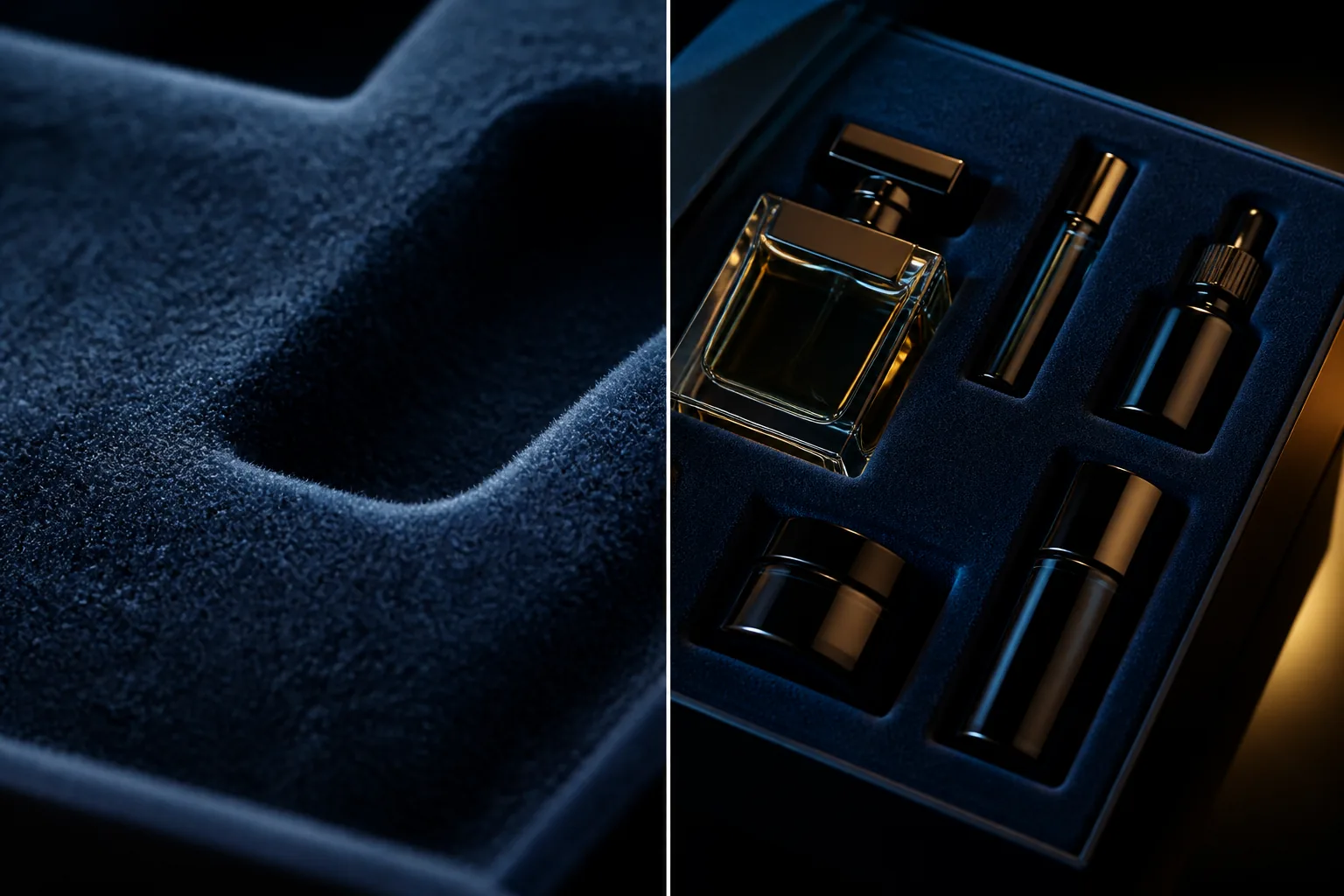
Shorter pile preserves small features and crisp boundaries; longer pile feels richer but can soften sharp contours. Density affects coverage, hand feel and the risk of the substrate showing through.
Dark colors emphasize depth and a jewelry-like presentation; light colors reveal contamination, pressure marks and shade variation more readily. Approve color in the actual box and intended lighting.
The adhesive system must balance bond, odor and aging. Coated bottles, foil, labels and soft-touch surfaces should be checked for transfer, blocking and contact marks.
VERIFICATION
Load the product into a sample insert, inspect the flock after removal, then test it in the intended shipping pack.
Use an agreed rub, tape or repeated-contact check to compare loose fibers, thin areas and substrate show-through. The acceptance method should be fixed during sampling.
Simulate assembly, repeated removal and shipping vibration, then inspect contact zones for polishing, pile flattening or permanent marks—especially at retention points and deep-cavity edges.
Odor can become more noticeable in a sealed box and should be assessed after realistic closure time. Sensitive uses may also need project-specific particle, storage and cleaning requirements.
Drop or vibration checks with the actual product, gift box and shipping case confirm that the insert stays intact and that repeated rubbing does not contaminate the product surface.
RFQ TO PRODUCTION
Early agreement on the product, box and visible-finish standard reduces repeated color, fit and appearance revisions.
Share the product or 3D dimensions, weight, sensitive finishes, box interior, brand color and transport needs, marking no-contact areas and priority presentation surfaces.
First confirm cavity fit, removal and box assembly, then review the target color, pile feel and adhesive system. Structure and finish can be approved in separate steps when needed.
A pilot establishes shade limits, flock coverage, critical dimensions, assembly method and protective packing. An approved sample becomes the comparison reference for repeat batches.
Series production checks appearance, fit and shedding at the agreed frequency. Changes to substrate, fiber, adhesive or process trigger review of the affected requirements.
03 / BUYER QUESTIONS
A fine flock layer gives the formed insert a soft, low-glare surface for cosmetics, liquor and health-product gift boxes.
Approve color, fiber shedding, abrasion, odor, adhesive system and product-surface compatibility on physical samples. Direct-contact applications require separate material and regulatory review.
Product dimensions and weight, brand color, desired pile feel, visible areas, contact requirements, drop conditions and gift-box assembly.
Loose fibers or wear can occur, especially at high-contact areas. Agree a check during sampling and test repeated product removal plus transport. Substrate preparation, adhesive, pile parameters and process control reduce risk, check the samples using the agreed acceptance method.
Start with cavity detail, desired touch, brand color and visible areas. Short pile preserves sharper geometry; longer pile feels richer. Density controls coverage and show-through. Approve color in the actual box, intended light and signed sample condition.
Direct-contact projects need a material-compatibility and regulatory review. Provide the product formulation, contact time and destination market so the substrate, fibre and adhesive can be checked.
Provide a product sample or 3D dimensions, weight, box interior, brand color reference, desired pile feel, contact restrictions, expected quantity and shipping conditions. Complete inputs improve the accuracy of structure, material and sampling decisions.
Read the buyer guide for this material →
START WITH THE PRODUCT
No drawing is required to start—send a product photo and rough dimensions.
Send a photo inquiry