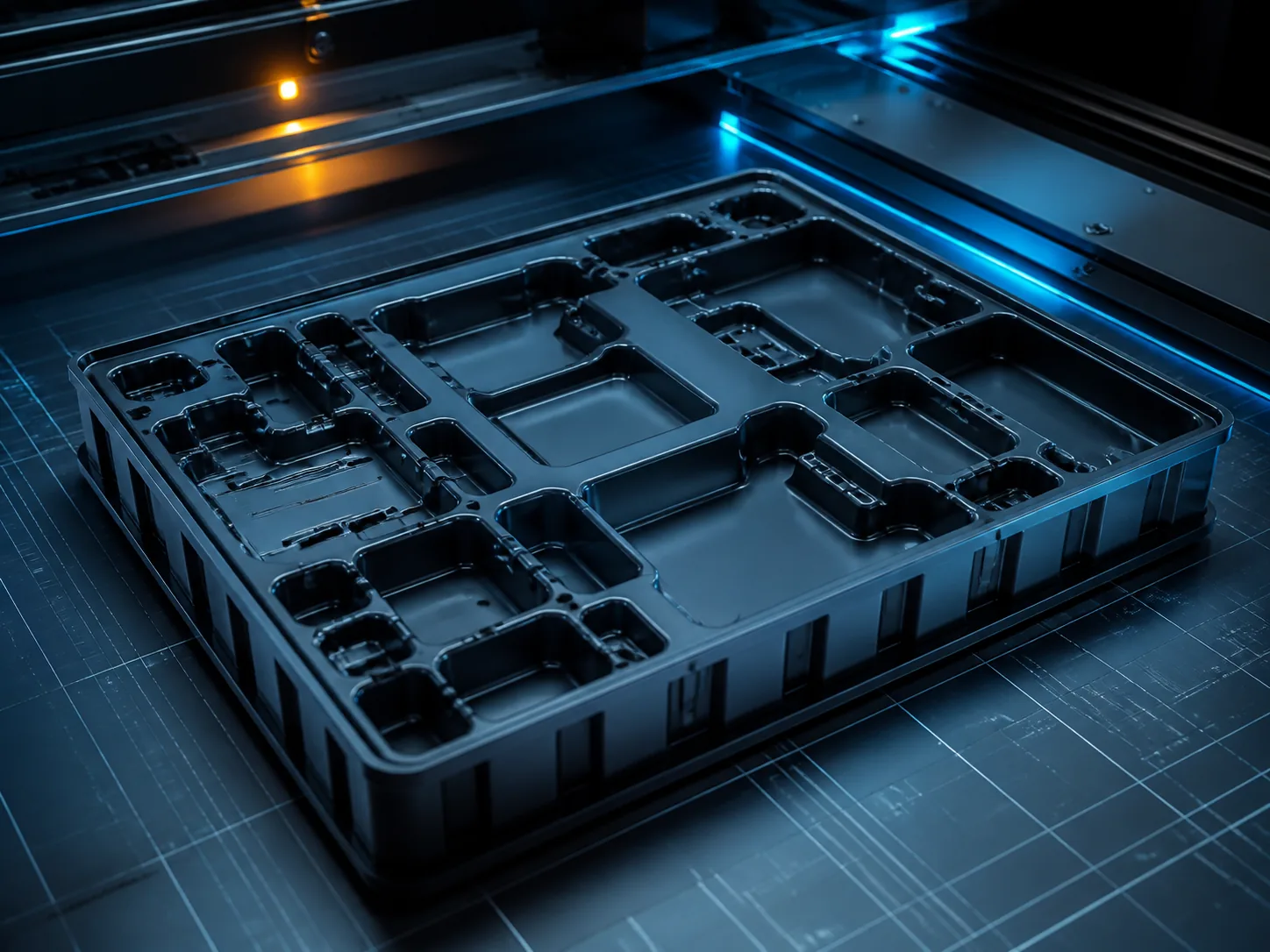
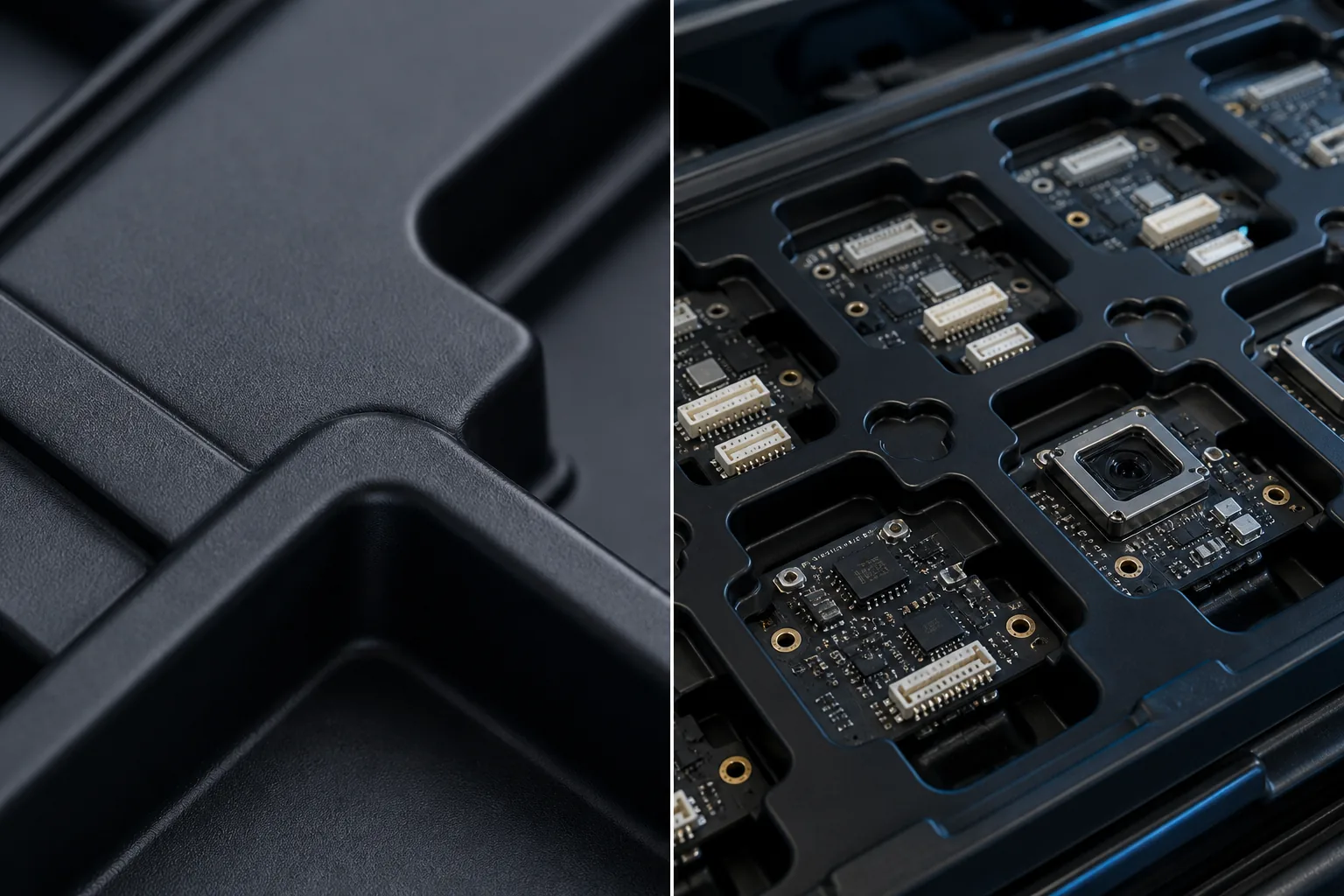
01What is Custom Antistatic PS Electronics Trays designed for?
Antistatic PS thermoformed trays for electronic and precision components; 10⁹–10¹¹ Ω is a target project specification, not a certified or measured batch result.
02What must be validated before production?
Agree the method, temperature, humidity and sampling locations before testing. At acceptance, compare results from production-representative finished trays with the target specification.
03What information is needed for a project assessment?
Component geometry and sensitive leads, resistance target, test method, temperature and humidity, sampling locations, sampling plan, cleanliness, reuse cycles, stacking and automated pick method.
04What is the difference between antistatic and conductive trays?
The core difference is surface resistance class. Antistatic grade (our target: 10⁹–10¹¹ Ω) suppresses static accumulation and suits general ESD-sensitive parts; conductive grade (typically 10⁴–10⁶ Ω) drains charge faster for higher-sensitivity setups, with color and cost trade-offs. The choice should follow the device's ESD sensitivity classification.
05How long does antistatic performance last?
It depends on how the property is built and the environment: permanent types carry it in the resin and shift less over time and humidity; coated types wear and decay. For reusable trays, agree on a retest cycle and manage service life with measured data.
06How should resistance acceptance criteria be defined?
Criteria must include the target range, test method, temperature-humidity conditions, sampling locations and measurement frequency. Numbers without conditions are meaningless—the same tray can read an order of magnitude apart at different humidity. These parameters are agreed item by item during project review.
07Can trays feed automated production lines?
Yes—provided automation is treated as a design input: pick-point geometry, array pitch, stack height and denesting features are designed alongside the gripper, vacuum or tray-denesting equipment. Share line equipment details or pitch requirements at the RFQ stage.
08How long can an antistatic PS thermoformed tray be used?
There is no fixed service life independent of use conditions. Record the antistatic construction, humidity and temperature, abrasion, cleaning, circulation count and storage time, then retest new trays and agreed cycle points with the same method, conditioning and locations. Retire a tray when electrical, dimensional or surface results fall outside the project acceptance rules.
09What surface resistance counts as acceptable?
Acceptance comes from the device, process and packaging specification, not a universal number. Tonghou's 10⁹–10¹¹ Ω range is only a project target for discussion. Buyer and supplier must also define method, electrodes and voltage, conditioning, locations, sample count and decision rule, then assess finished-tray data. Resistance alone does not demonstrate every ESD function such as low charging or shielding.
010Can antistatic performance decay?
Yes, it can change with the material system, humidity, time, abrasion, contamination and cleaning history. Establish a baseline, retest actual circulated trays at agreed intervals at the same locations, and record surface wear and environment. A material, process or cleaning change should trigger review of the retest plan.
011Are black or coloured antistatic trays more stable?
Colour is not evidence of stability. Black and coloured products may use different resins, fillers or surface treatments, but the colour itself does not prove retained electrical performance. Form candidate materials into the real geometry and compare initial readings, multiple locations and post-circulation or abrasion results under the same conditioning, alongside contact, shedding and appearance needs.
012Can an ESD meter be used for acceptance?
A resistance tester with the range and method agreed by both parties can be used, but the instrument label does not define acceptance. Specify calibration status, electrodes, test voltage, conditioning, measurement time, cavity/base/flange locations and sample count. Test finished trays against the written decision rule and retain both conditions and results for comparison.
013Can antistatic PS contact solder paste?
Compatibility cannot be inferred from the words antistatic PS. Provide the actual paste or its supplier data, contact location and duration, temperature, cleaning agents and acceptable contamination criteria. Test the specified PS formulation and formed sample for appearance, softening, cracking, residue and effects on paste performance, then obtain approval from the solder-paste or process owner before production use.
014Can antistatic trays be wiped with alcohol?
There is no universal alcohol-cleaning rule for every antistatic PS. Define the alcohol type and concentration, wipe material, repetitions, drying method and cleanliness target, then trial a small area of the actual material and formed part. Check whitening, cracking, distortion, surface migration or residue and retest resistance after drying and conditioning before applying the method to a batch.
015Is an antistatic test report included with delivery?
Request a test report when asking for a quote. Agree the method, environment, locations, sample count, lot identification, acceptance range and testing party. Tonghou will then confirm the record format for the order and acceptance plan. The report must cover the delivered finished trays; data from another batch or the starting sheet cannot replace it.